
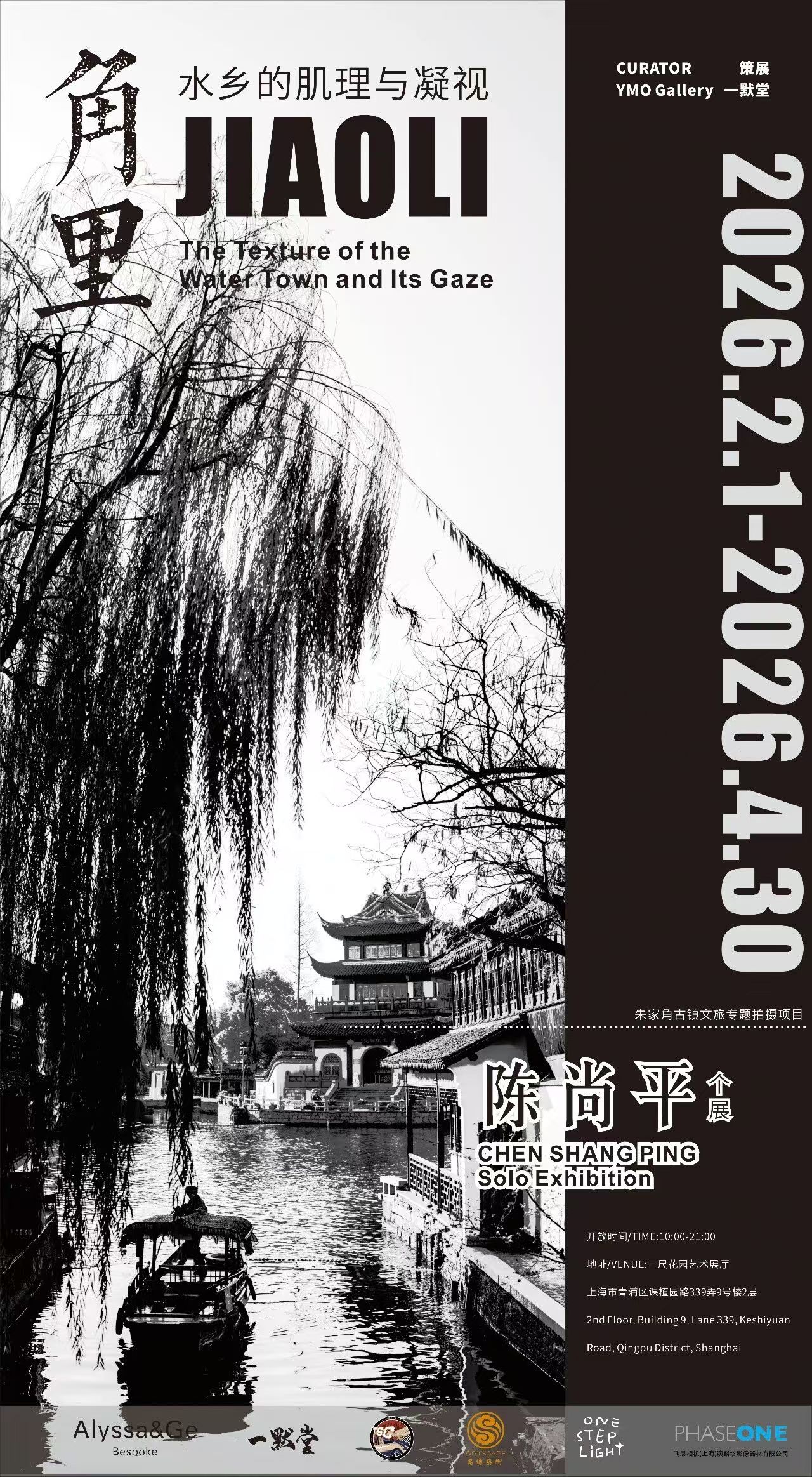
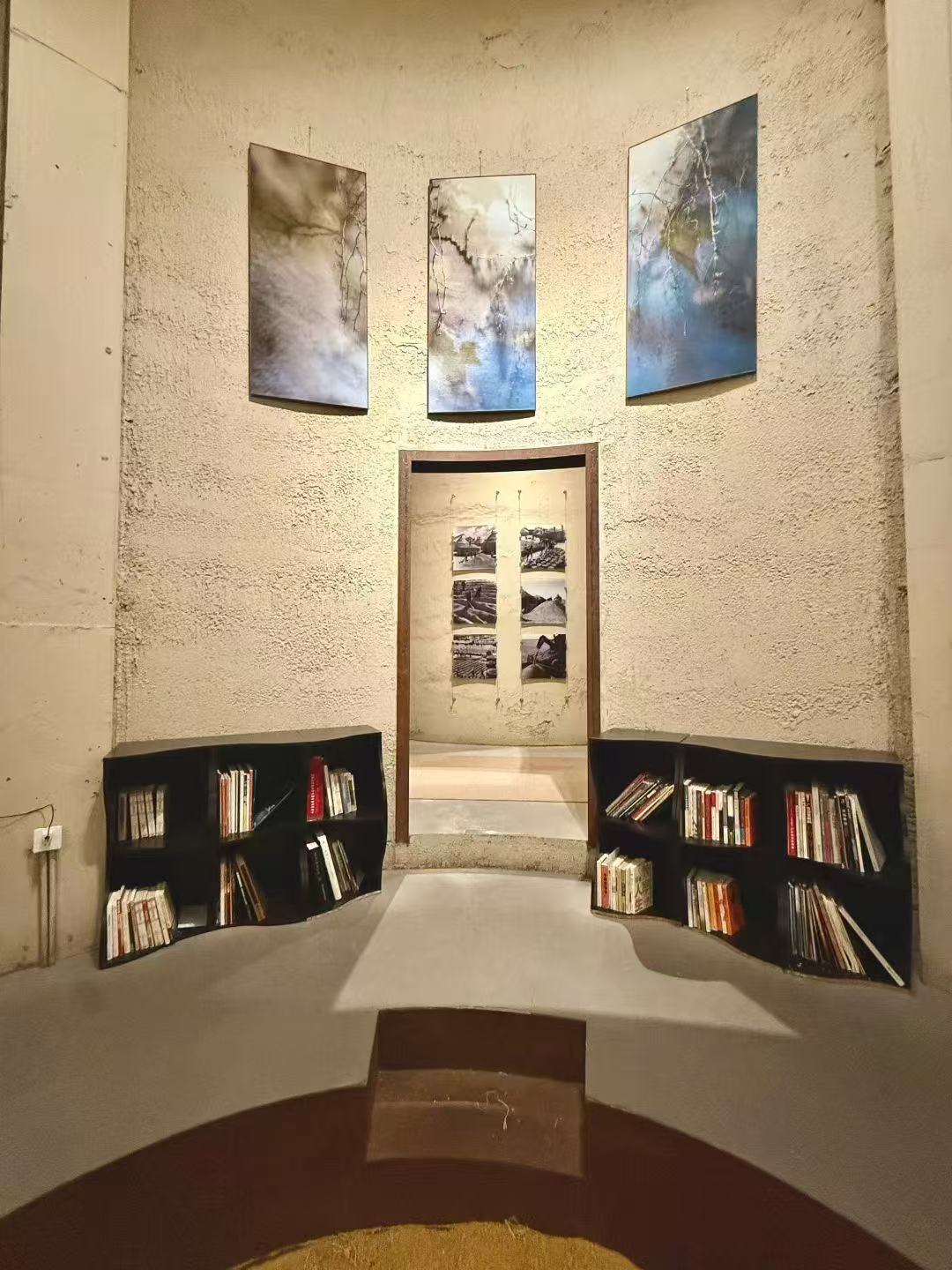
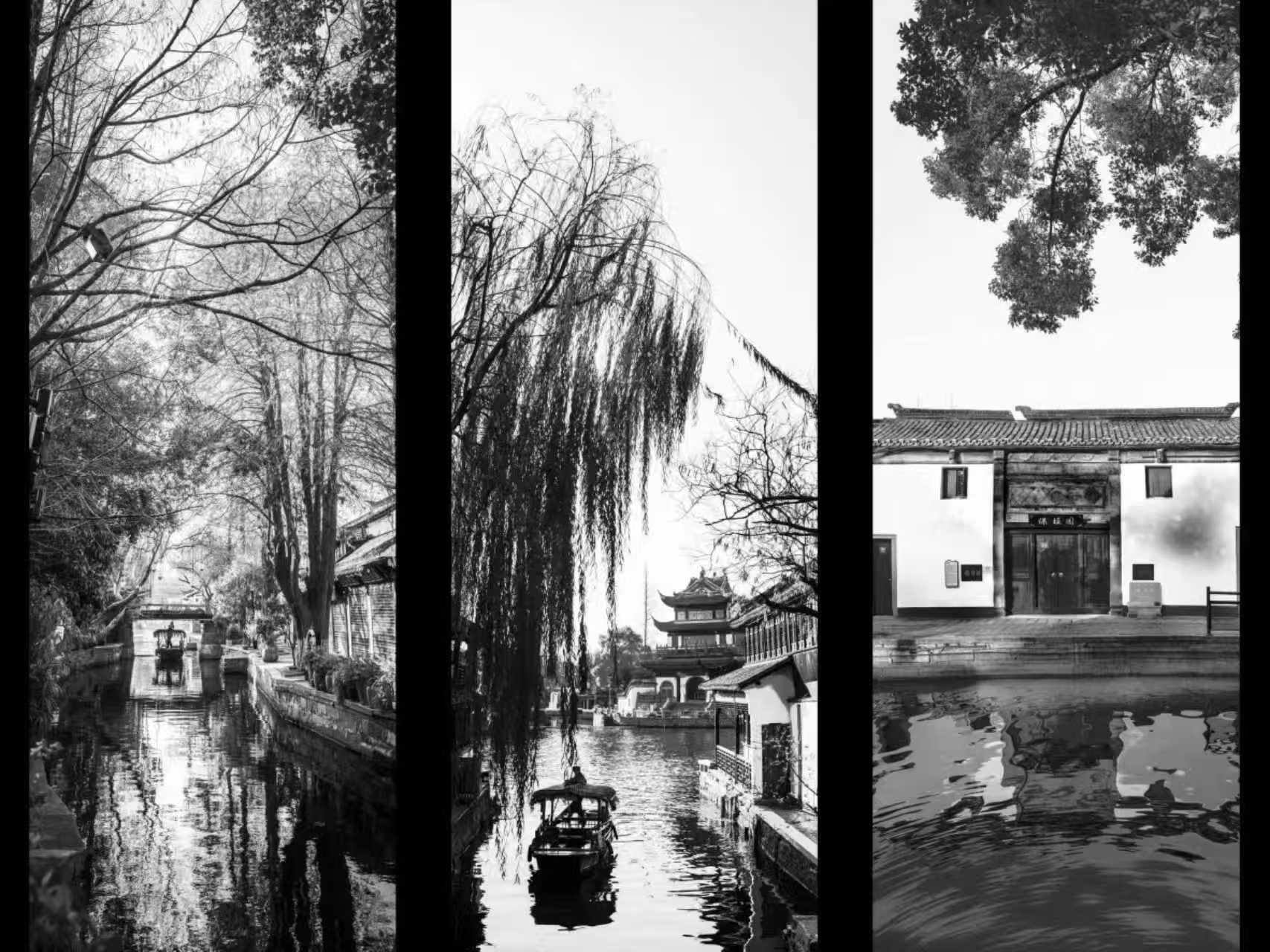
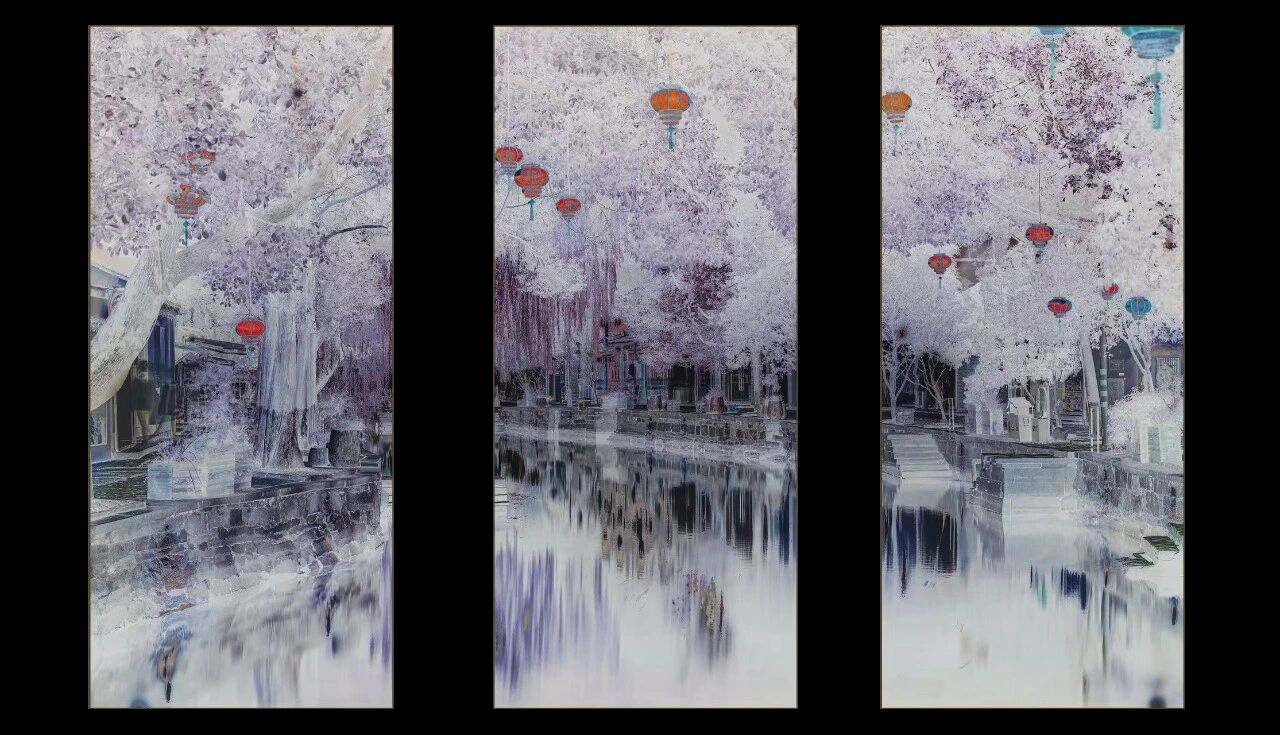
The first gallery presents three monumental vertical photographs, each measuring 1.5 meters in width and four meters in height. Drawing on the viewing logic of Chinese landscape handscrolls, these three works extend the water town’s rivers, bridges, houses, and lanes along the vertical axis, forming a continuous spatial field imbued with rhythmic vitality.
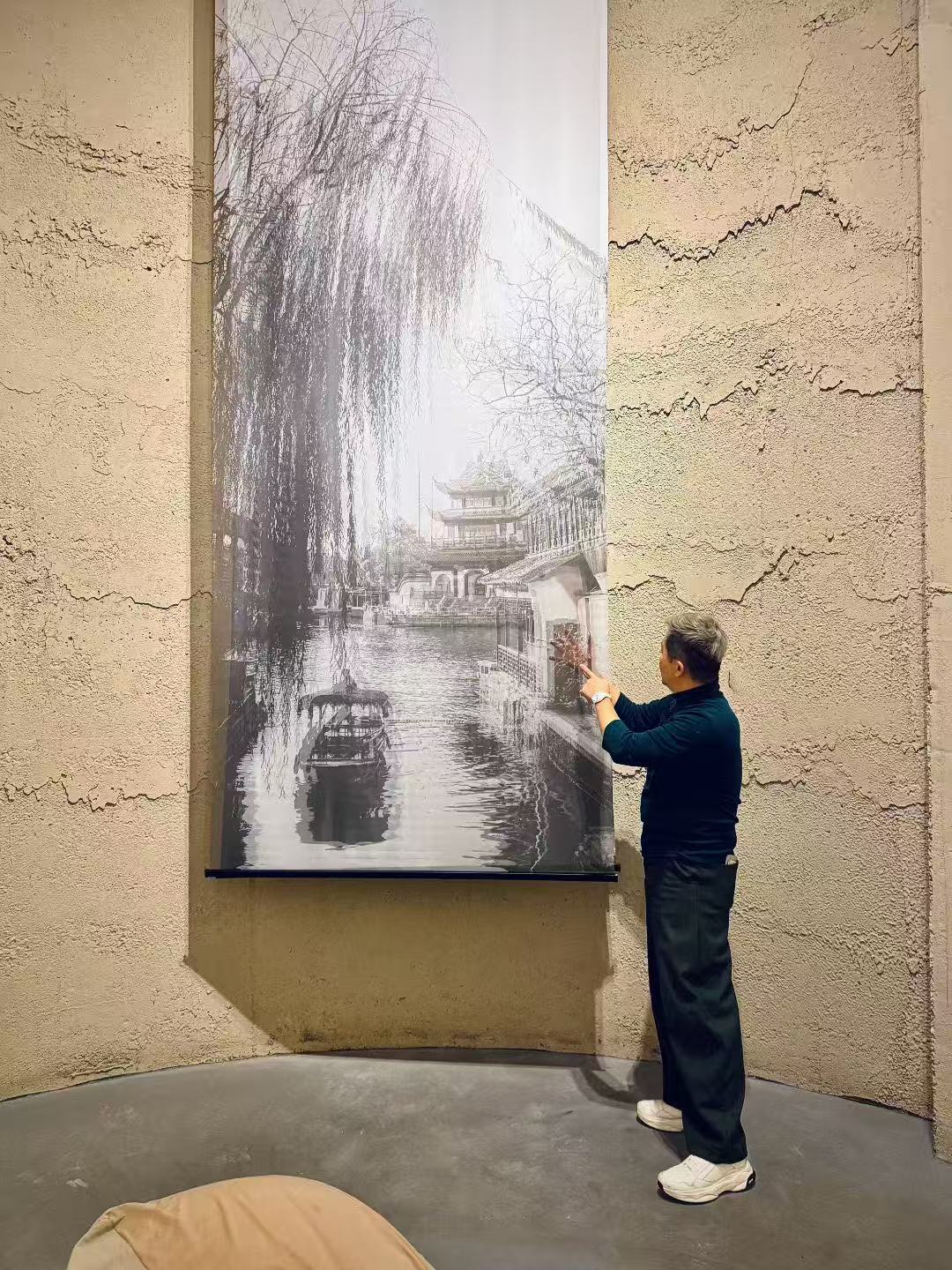
Each image is veiled by a layer of translucent gauze. The layering of gauze and image blurs its spatial depth and also serves as the artist’s way of invoking time: impressions of the water town continually drift, grow, and transform between “reality” and “memory”—at once present and indistinct.
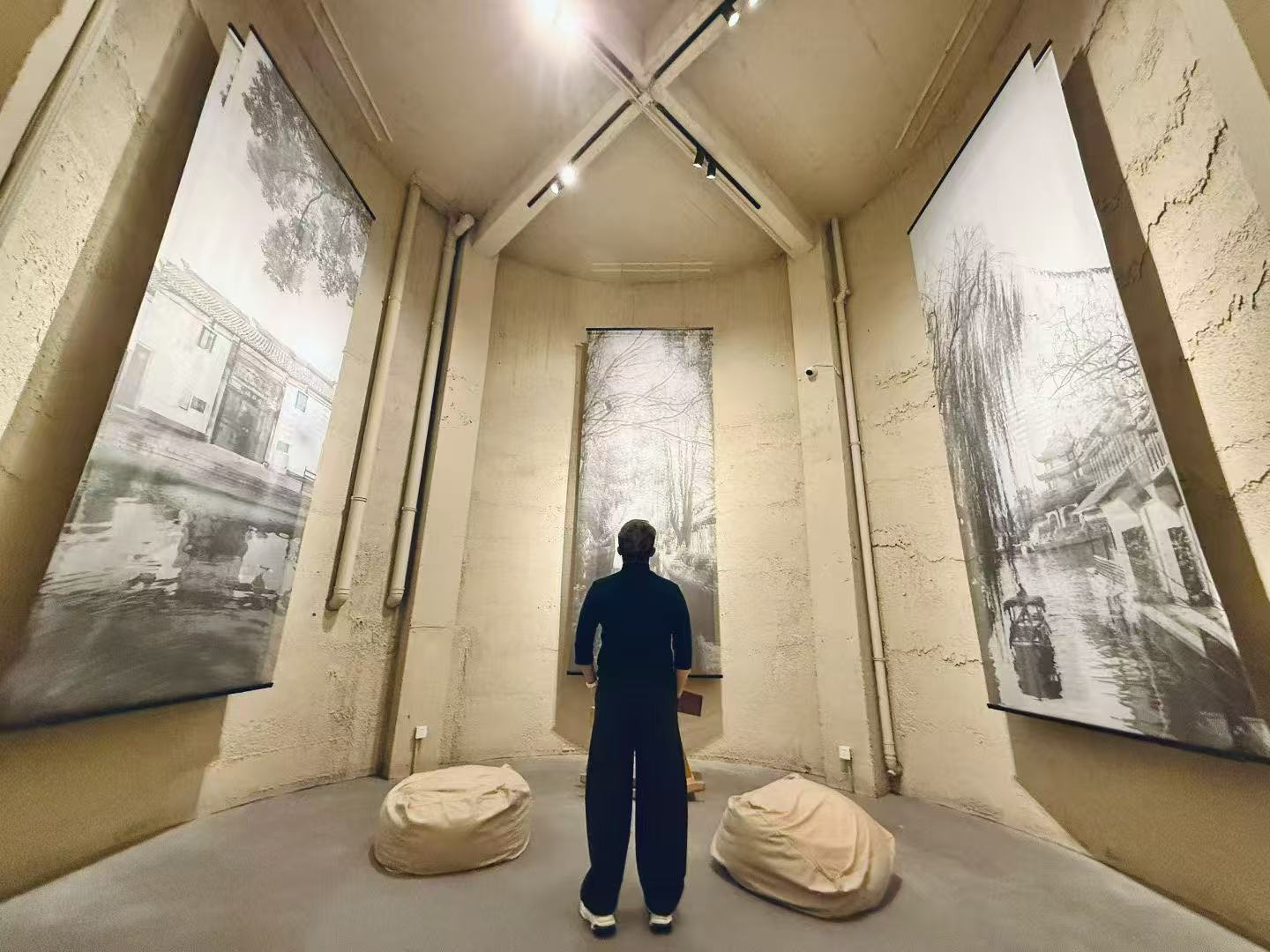
The works’ overall vertical orientation departs from the traditional roaming mode of landscape viewing. Within the lofty and expansive interior of the former silo, gazing upward at these towering vertical photographs evokes a sudden sense of solemn grandeur. The works are experienced not only through sight, but also through space and the body. At that moment, we are no longer mere spectators standing before a landscape; we find ourselves inside it, inhabiting the world created by the work.
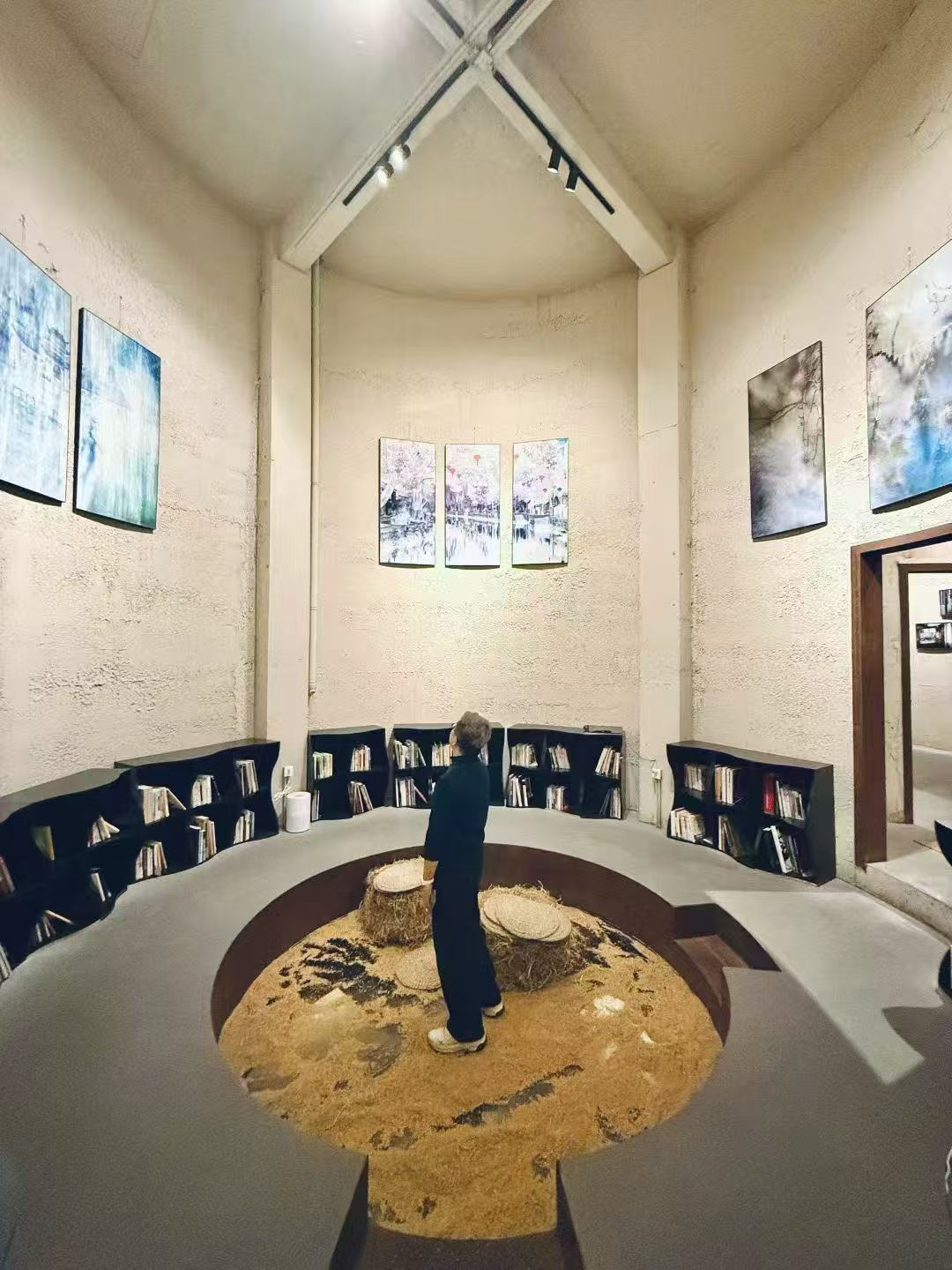
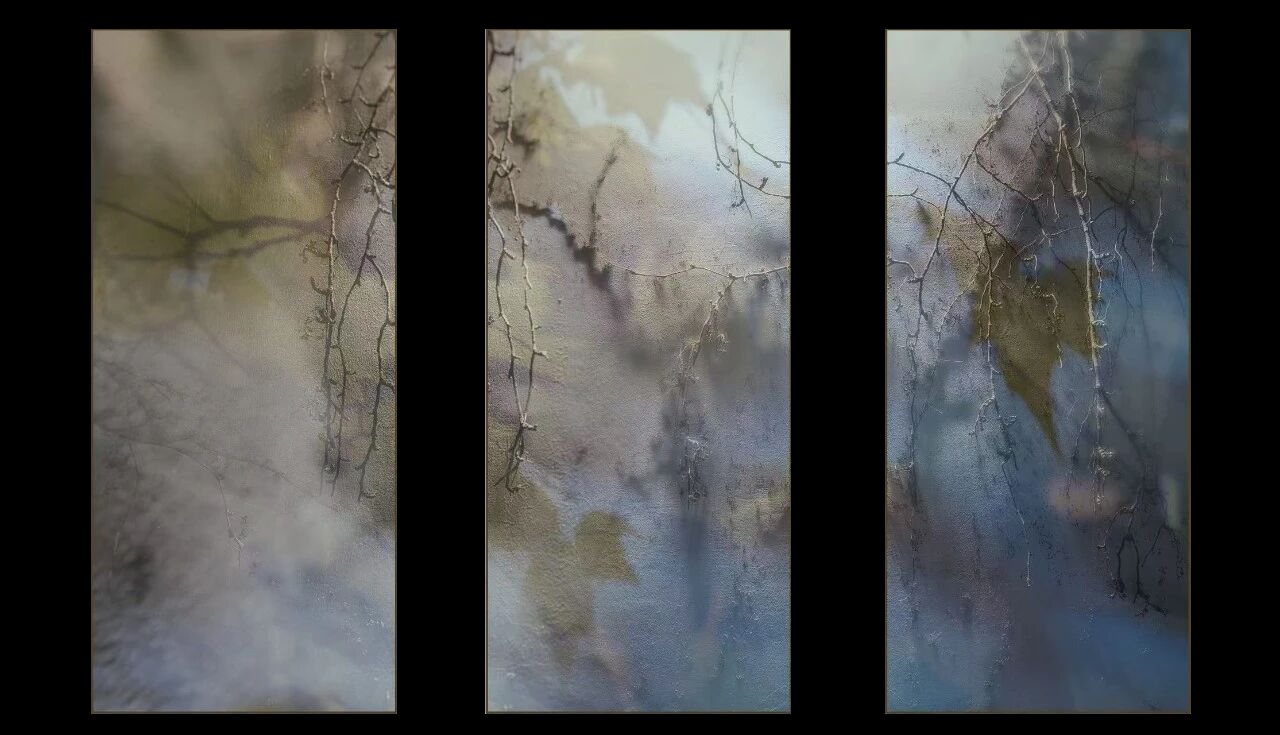
The second gallery presents three photographic folding screens centered on nocturnal light and overlooked details: reflections moving across water, the textures of weathered walls and the shadows cast by climbing vines.
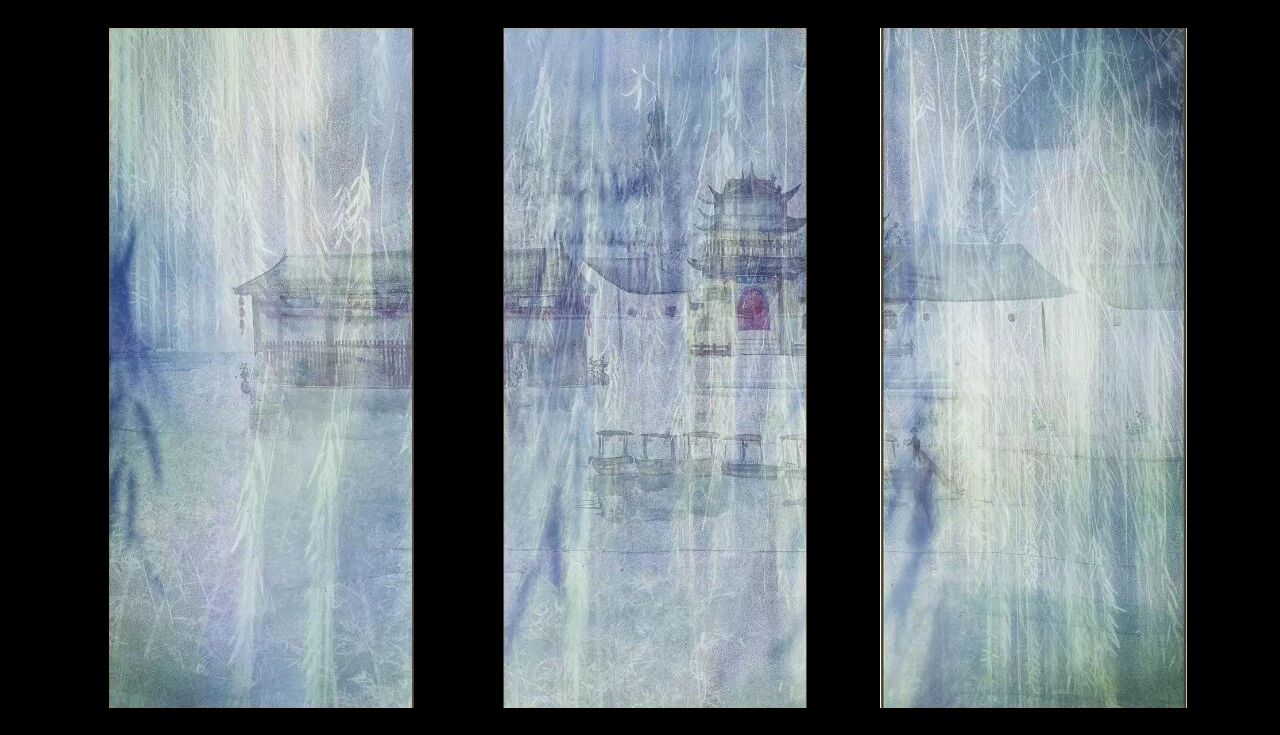
Quiet and approaching abstraction, the images are marked by mottled, film-like tones that create an atmosphere suspended between the real and the imagined.
Recognizable landmarks have been deliberately reduced. Instead, light, shadow, trace and texture become the principal visual motifs. Released from familiar geographical symbols, the water town is stripped of predetermined associations and returned to a more immediate visual and sensory experience.
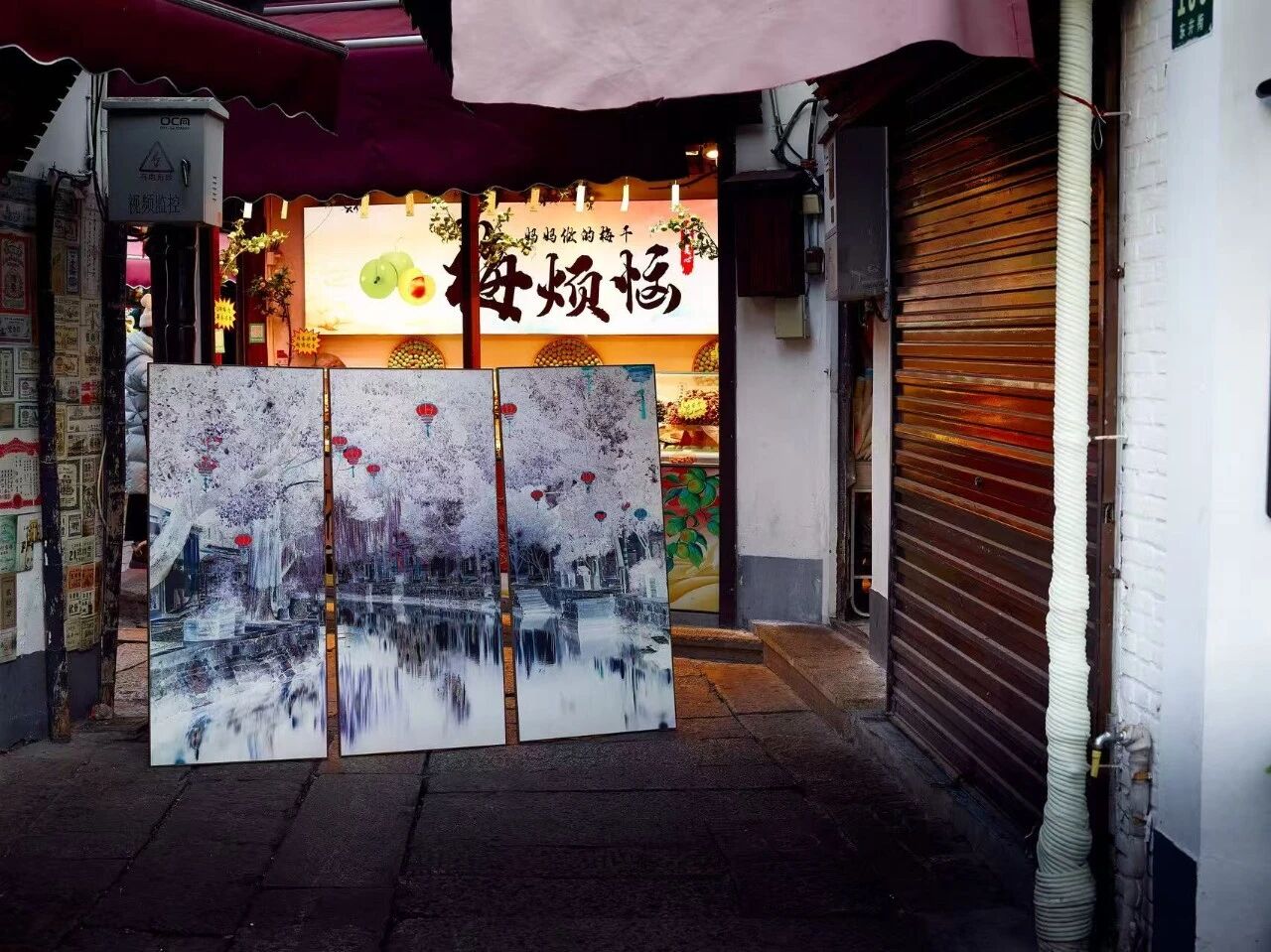
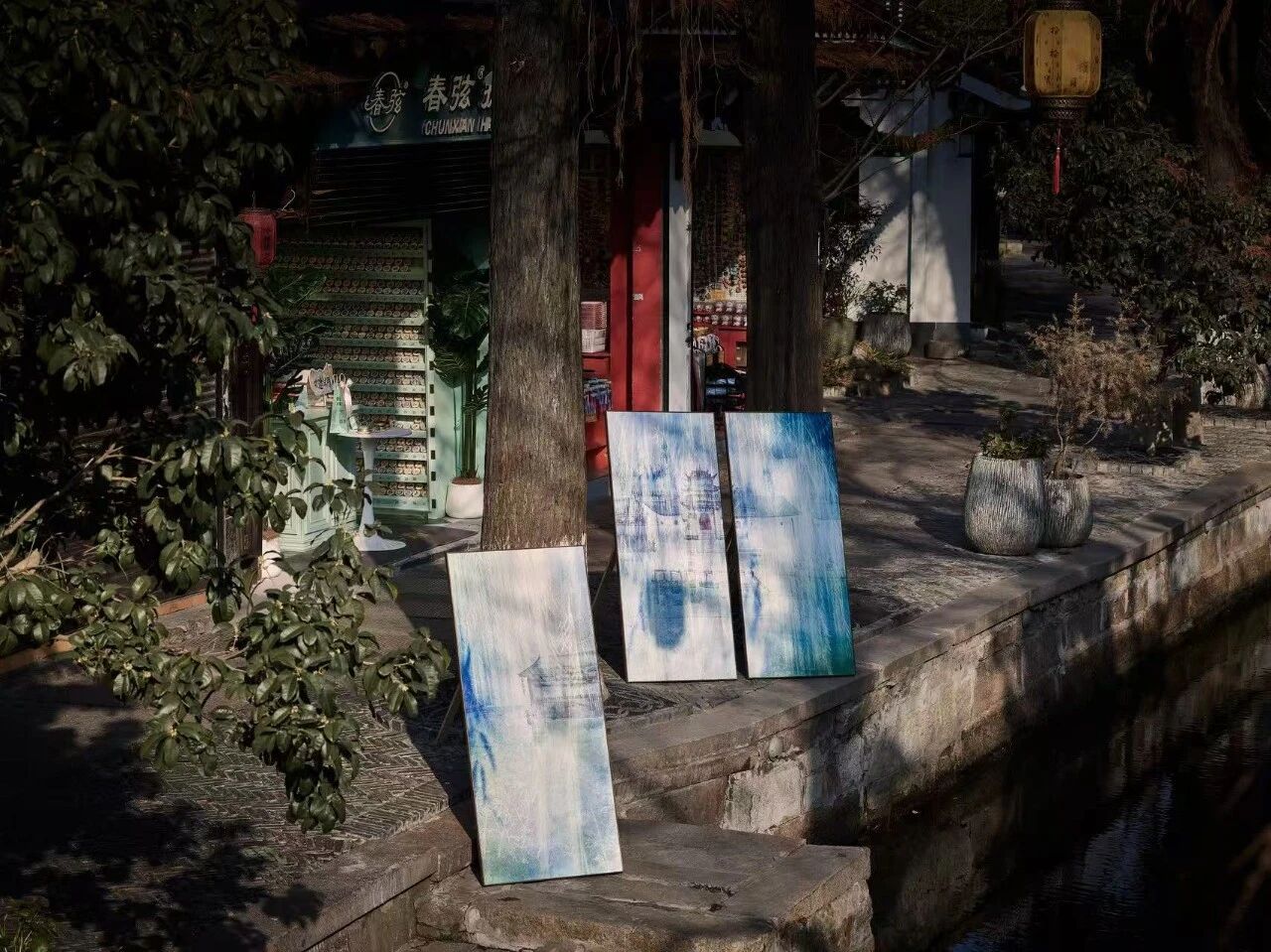
The third gallery presents a new act of image-making. The six-installation works shown in the first two galleries were returned to the streets and waterways of Zhujiajiao and photographed again within the places from which they emerged.
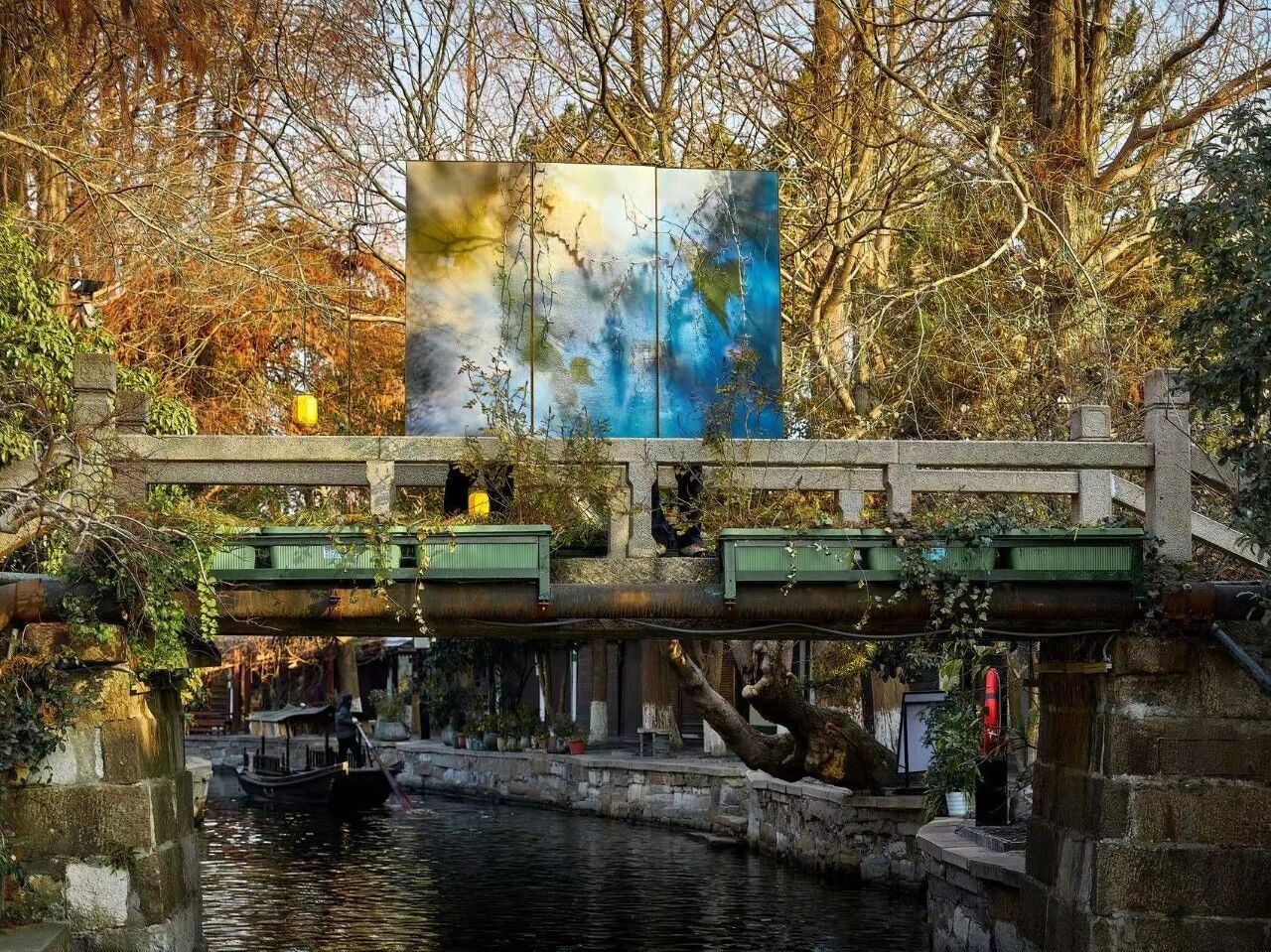
The works appear between the old façades and newly fitted windows of local shops, alongside monochrome street scenes, or opened into the everyday life of a corner passed by visitors. For Chen Shangping, placing image and reality side by side is not only a form of dialogue, but also a way of asking how art might enter a place—and how contemporary practice might coexist with the lived textures of an ancient town.
Between inherited histories and contemporary life, art may become a subtle medium through which memory and the present, stillness and vitality, are brought into relation.
The Jiaoli exhibition unfolds as a gradually expanding act of observation: from scroll-like works experienced through space, to abstract fragments of light and shadow, and finally to images reintroduced into the everyday life of the town.
Through this structure, the exhibition invites viewers not only to see Zhujiajiao, but also to become conscious of the act of looking itself. How do we look at a water town—and what details remain concealed beyond the ways in which we have learned to see it?
© CHEN SHANGPING